Executive workshop
A half-day workshop that changes how your leadership team thinks about AI in customer experience. Not a tech demo. Not a trend briefing. A structured session built on 20 years of CX strategy and the frameworks from Designing AI Conversations at Scale.
Download one-pager (PDF)
What this is
This workshop gives your team a structured way to see the problem. It draws on concepts from conversation design, behavioural psychology, knowledge architecture, voice AI, and agentic systems to show why the same AI platform produces wildly different outcomes in different organisations.
You will leave with a shared language for the decisions ahead, a clear understanding of what your AI is actually inheriting, and concrete actions for Monday morning. The half-day format gives your team enough time to work through real exercises, not just listen to ideas.
It is not vendor-specific. It is not a pitch for any platform. It is the thinking that should happen before those decisions get made.
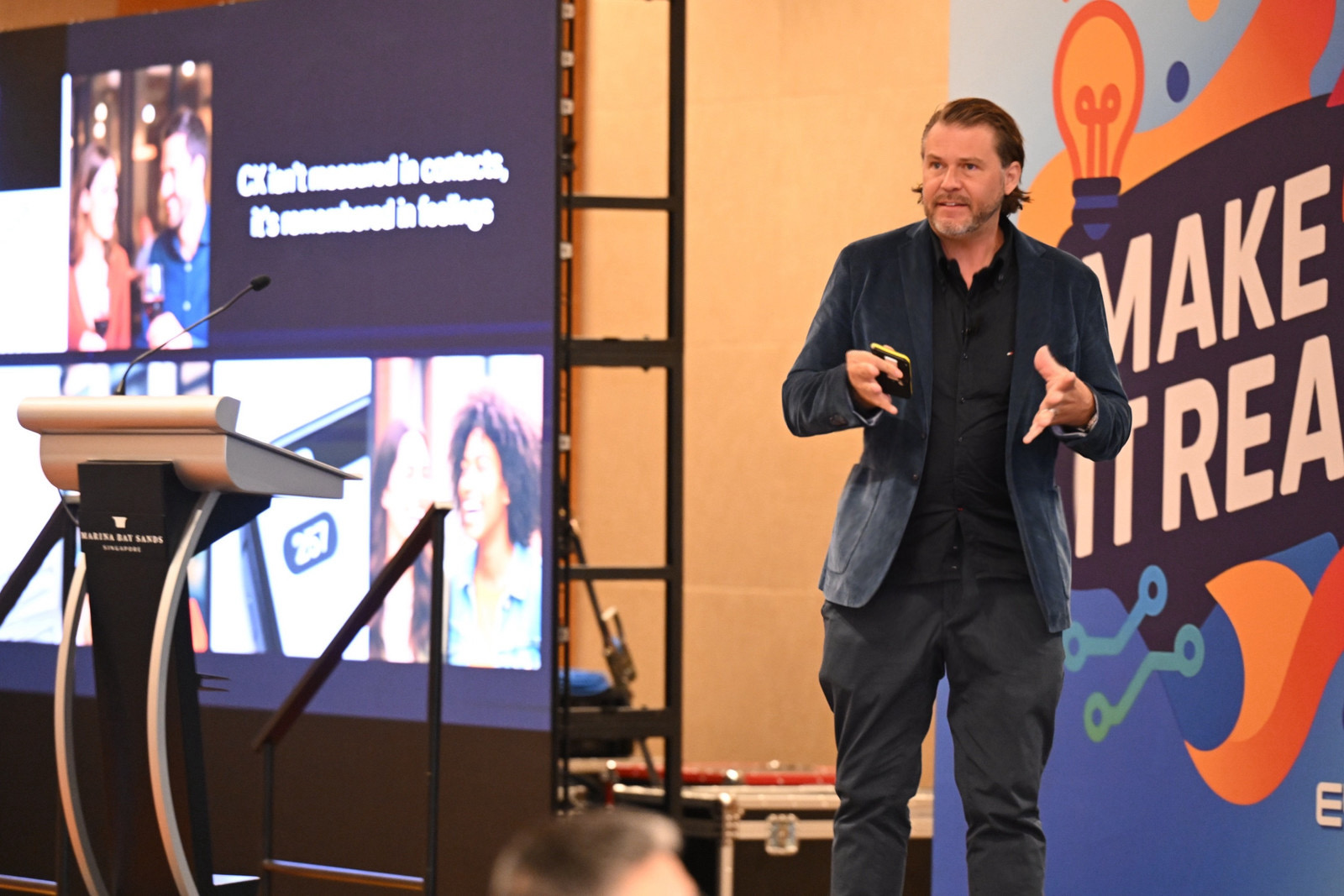
Marina Bay Sands, Singapore
What you'll walk away with
A structured exercise that maps the assumptions, metrics, and operating constraints your AI has inherited from the environment it was deployed into. Most teams have never done this.
Four dimensions of AI value that most business cases miss entirely: agent productivity, customer outcomes, revenue performance, and compliance. If your ROI model only measures frontline staffing, you're blind to most of the value.
Organisations fall into recognisable patterns when deploying AI. The Deflector. The Pilot Factory. The Risk Gatekeeper. Knowing your pattern is the first step to changing it.
Concrete things to stop doing and start doing. Not a roadmap that gathers dust. Specific, actionable changes your team can make immediately.
The half day
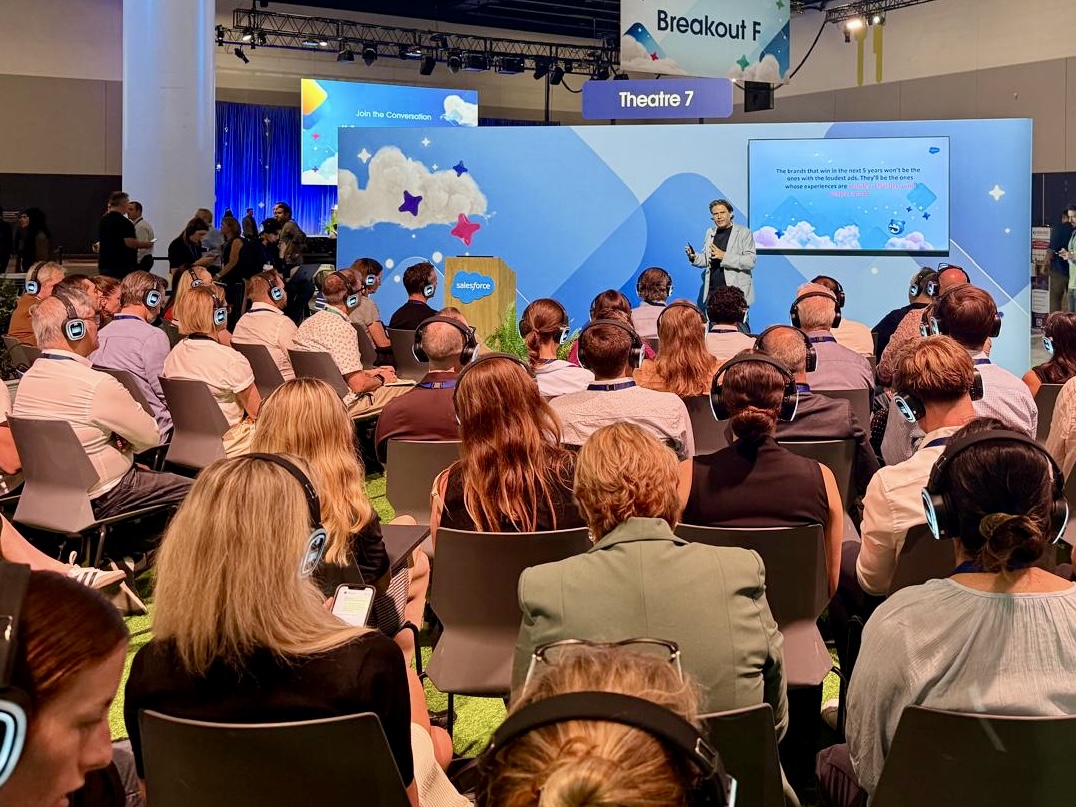
Why AI in CX keeps underperforming. The three structural problems that existed before AI arrived. Demand revelation. Perceived incomprehension. The peak-end rule. Why "automate X% of contacts, reduce X% of agents" is almost always wrong. Enough time for the room to sit with each concept and recognise their own environment in it.
Design moves from the book applied to your context. Intent design done backwards. Voice AI as its own discipline. RAG and knowledge architecture. Why the model's instinct to be fluent is stronger than its instinct to be accurate. The containment illusion. Deep enough to change how your team evaluates AI, not just how they talk about it.
The best side conversations happen during the break. Ideas settle. People compare notes with colleagues. This is by design.
Table exercises. Your team works through three structured prompts: the inheritance audit, the demand question, and the ROI reframe. 15 to 20 minutes of focused group work, followed by facilitated share-back where Ben challenges assumptions, connects insights to the framework, and coaches in real time. This is the part you can't get from a keynote.
Three things to stop. Three things to start. The AI Health Check diagnostic as a next step. Open Q&A. Clear, specific, and designed to survive the walk back to the office.
Who this is for
CX leaders, contact centre heads, AI and digital transformation leads, CTO/CIO teams, and anyone accountable for how AI shows up in customer-facing operations. Works best with 15 to 40 people. Scales to 100+ with pre-assigned groups.
Particularly relevant for organisations in financial services, telecommunications, BPO, government, and technology, where AI decisions carry regulatory, reputational, or operational weight.
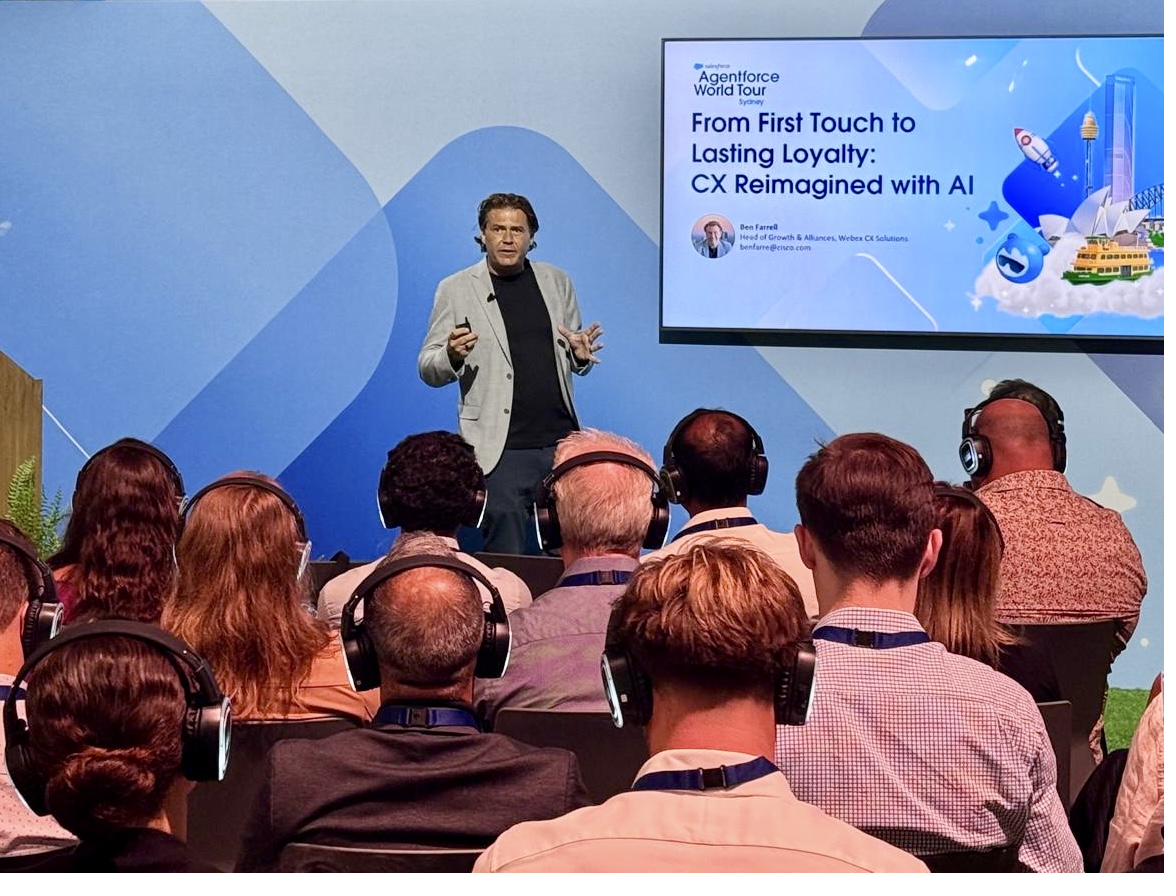
Agentforce World Tour, Sydney
Why this thinking lasts
Every few months a new model drops. Context windows expand. Latency shrinks. Costs fall. This workshop doesn't teach you about any specific model, and that's the point.
The concepts in this workshop are deliberately upstream of the technology. They address the structural, operational, and design decisions that determine whether any AI platform, current or future, will succeed or fail in your environment.
Perceived incomprehension doesn't go away when the model gets smarter. Containment is still an illusion with a better LLM behind it. A disjointed ecosystem doesn't integrate itself because you upgraded your agent.
The faster AI capability advances, the more these decisions matter. The organisations that get these foundations right will absorb new capability faster, deploy it more safely, and create better outcomes than those still arguing about which model to buy.
What's included
Half-day facilitated workshop with Ben Farrell, tailored to your industry and operating context
Workshop deck and materials including the inheritance audit worksheet and ROI reframe template
AI Archetype Diagnostic access for all participants via benfarrell.ai
A copy of the book for each participant, Designing AI Conversations at Scale (digital or physical, your choice)
Post-workshop summary of key themes, group insights, and recommended next steps, delivered within one week
Formats
Available in Sydney, Singapore, Manila, Bangkok, Seoul, and across APJC by arrangement. Ben has direct in-market experience across all of these regions. In-person workshops include facilitated table exercises and real-time group coaching.
Delivered via Webex, Zoom, or Teams. The workshop is structured to work in virtual format with breakout rooms replacing table exercises. Same content, same facilitation, same outcomes. Available in any timezone.
Common questions
No. This is not prompt engineering or tool training. It is a strategic workshop for leaders who are accountable for AI decisions in customer experience. The focus is on the design, operational, and governance choices that determine whether AI creates value or quietly destroys it.
No. The workshop is entirely vendor-neutral. It applies regardless of which AI platform, contact centre solution, or CRM you use. The frameworks are upstream of the technology.
Yes. The deep-dive section is modular by design. Financial services teams get governance, compliance, and agentic AI. BPO and contact centre teams get demand economics, agent assist, and measurement. Telco and technology teams get journey orchestration and context architecture. Ben tailors the examples and case studies to your sector.
The concepts are deliberately upstream of any specific model or platform. Perceived incomprehension, demand revelation, the containment illusion, environment inheritance: these are structural and behavioural patterns, not technology trends. They become more relevant as AI capability advances, not less.
Most AI workshops teach teams how to use tools. This one examines why the same tools produce wildly different outcomes in different organisations. It is built on frameworks from the book Designing AI Conversations at Scale and two decades of designing, building, and fixing AI systems used by millions of customers across financial services, telco, BPO, and government.
Book now
Get in touch to discuss dates, format, and how the workshop can be tailored to your industry and operating context.
Book this workshopOr email directly: hello@benfarrell.ai