AI CX Consulting · Philippines
APJC · Vendor-neutral

Independent AI consultant · Lived and worked in Manila · 20+ years in enterprise CX across APJC

AI strategy for the world's most experienced contact centre market.

The Philippines does not need to be convinced that contact centre work matters. It already knows. I spent a significant part of my career here — living in Manila, managing a local contact centre, and learning firsthand what makes this industry tick. The culture, the constraints, the talent, the pride people take in the work. That context shapes every advisory conversation I have about AI in this market.

20+
Years in enterprise CX
APJC
Operating region
6
AI maturity archetypes
0
Vendor affiliations
01 / The Philippines context

AI in CX here is not a technology question. It is a people question.

The Philippines is home to one of the largest and most skilled contact centre workforces in the world. That is not background context. It is the central strategic fact that every AI decision in this market has to reckon with. The technology challenges are real. The language challenges are solvable. The workforce transition challenge is the one that determines whether AI deployments succeed or quietly fail.

01

Three BPO situations, three different AI strategies

The Philippine BPO landscape is not uniform. Some enterprise clients arrive with a platform already chosen and expect their BPO to operate within it. Others are actively looking to their BPO to advise on that decision — the BPO as strategic partner, not just delivery engine. And a growing number of BPOs are developing their own AI and CCaaS capabilities entirely, building proprietary platforms to differentiate their offer. Each situation demands a different AI strategy. Treating them the same is where most advisory falls short.

02

Taglish: finally a solvable problem

The natural mixing of Tagalog and English in Filipino conversation — with heavy abbreviations, informal phrasing, and fluid code-switching — has always challenged traditional NLU systems trained on clean, single-language data. GenAI handles this significantly better. It does not need every utterance to match a predefined intent. It understands context, tolerates variation, and responds naturally across language registers. This opens up automation possibilities in Philippine contact centres that simply were not viable with earlier technology.

03

Agents as partners, not passengers

Contact centre work in the Philippines is a skilled profession with real cultural status. It represents a genuine career path and a source of professional pride. When AI arrives positioned as a replacement, agents disengage — and that disengagement shows up as poor adoption, workarounds, and data quality problems that undermine the AI's performance. The organisations that get this right consult agents before they build anything, and make agents active contributors to how the AI behaves. Their expertise is the training data. Their knowledge is the system.

02 / Business continuity

When the typhoon comes, your BCP had better actually work.

The Philippines experiences typhoons, flooding, and infrastructure disruption with a frequency that makes business continuity planning a genuine operational discipline — not a document that lives in a drawer until something goes wrong. For contact centres handling time-sensitive customer interactions across banking, insurance, and utilities, the question is not whether disruption will happen. It is what the operation looks like when it does.

AI and automation change what is possible in a continuity event. Well-designed AI can handle customer contact volume when agents cannot physically be present, route to available capacity across distributed or remote sites, and maintain a service baseline that keeps critical interactions moving. BCP that does not account for AI-assisted continuity is increasingly incomplete — and in the Philippines, it is a gap that will be tested.

This is not about replacing humans with automation when disaster strikes. It is about designing a system where AI holds the line on routine interactions, freeing human capacity for the contacts that need it most. That design has to happen before the event, not during it. Most organisations are not designing it deliberately enough.


03 / What I help with

Three ways to work together.

01

Pre-investment AI review

A two to three week audit that pressure-tests your AI and CX strategy, environment, and assumptions before major budget decisions are locked in. Particularly relevant for Philippine BPOs evaluating platform decisions — whether that means assessing a client-mandated platform, advising a client on selection, or stress-testing a proprietary AI build. Output is an executive-ready report with risks, blind spots, and priority moves.

02

Executive AI advisory

Ongoing, vendor-neutral advisory for BPO leadership teams and enterprise contact centre executives navigating AI strategy, workforce transition, and platform decisions. Project-based or retainer. Covers AI readiness, agent change management, GenAI language capability assessment, and BCP design for AI-assisted operations.

03

Keynotes & workshops

Executive workshops and keynote speaking on AI strategy and the specific dynamics of AI in CX across the Philippine BPO sector. Topics include agent-centred AI design, GenAI for multilingual contact centres, BCP and automation strategy, and the organisational readiness factors that determine whether AI investments perform. Available for Manila-based events and regional conferences.

Full advisory details
04 / Why this advisory

Not just APJC experience. Philippine experience.

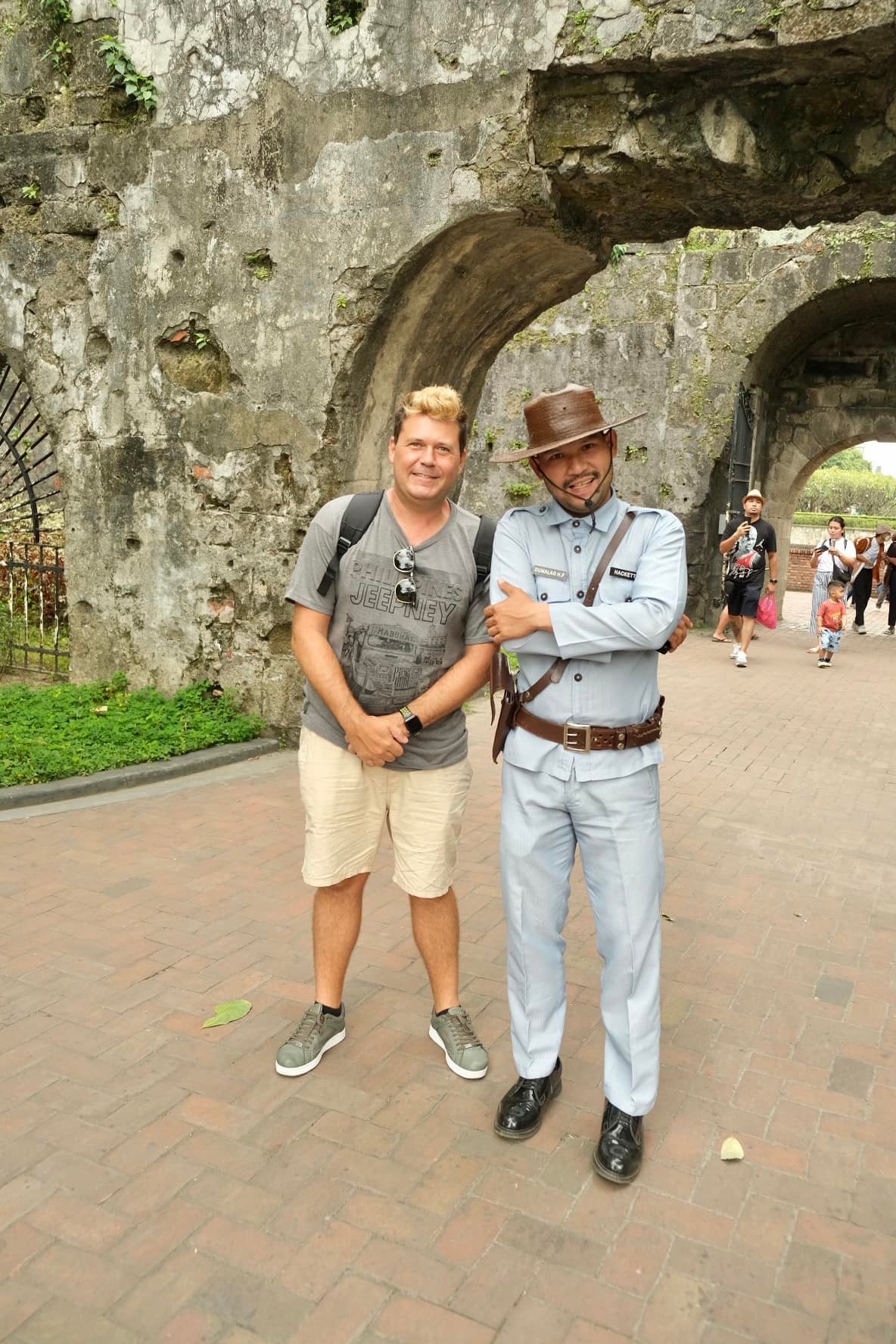
A significant part of my career was spent in the Philippines. Living in Manila. Managing a local contact centre. Working alongside Filipino agents, team leaders, and operations managers — understanding the rhythms of the work, the culture of the floor, and the real constraints that shape how contact centres here actually run. Not from a conference stage or a vendor roadshow. From the inside.

That lived experience is what makes the advisory different. I understand why agents here take pride in their work in a way that demands respect, not displacement. I understand the BCP reality of typhoon season. I understand the commercial dynamics of a BPO industry where client relationships, platform decisions, and workforce pressures all intersect. And I understand what AI can realistically do in that environment — and what it can't.

This advisory practice is also independent. No platform. No integration revenue. No vendor partnership incentives. The advice is shaped only by what is right for your situation.

05 / Sectors

Where the AI CX experience comes from.

Twenty years across the sectors most represented in Philippine BPO operations — with direct APJC experience across financial services, telecommunications, and technology.

BPO & Outsourcing Banking & Financial Services Insurance Telecommunications Healthcare Retail & E-Commerce Technology Government

Free AI CX diagnostic

Find out which of the six AI archetypes describes your organisation.

Sixteen scenario-based questions. Five minutes. A clear read on the behavioural pattern driving your AI in CX decisions — and what it typically costs.

Take the diagnostic
06 / FAQ

Common questions about AI in CX in the Philippines.

How should Philippine BPOs approach AI strategy when clients dictate the technology?

It depends on the client relationship. Some enterprise clients arrive with a platform already selected and expect the BPO to operate within it. Others are actively looking to their BPO as the expert to guide that decision. And some forward-thinking BPOs are developing their own AI and CCaaS capabilities entirely. The right AI strategy differs significantly across these three situations. A BPO that treats all three the same will be underserving at least two of them — and leaving commercial opportunity on the table in the process.

Can GenAI really handle Taglish in contact centre conversations?

Yes — and this is one of the clearest advantages GenAI has over older conversational AI approaches in the Philippine context. Taglish, the natural mixing of Tagalog and English with heavy abbreviations and informal phrasing, has always challenged NLU systems that rely on intent classification and pattern matching. Modern GenAI models handle code-switching significantly better because they understand context rather than matching utterances to predefined categories. This makes automation viable for a much wider range of Filipino customer interactions than was previously possible.

How do you introduce AI without alienating experienced contact centre agents?

You involve them before you build anything. Contact centre work in the Philippines carries genuine professional status — it is a skilled discipline, not a stepping stone. Agents who feel their expertise is being bypassed will find ways to work around the AI, and those workarounds will corrupt the data and degrade the performance that justified the investment. The organisations that get this right treat agents as domain experts whose knowledge shapes how the AI is designed. Their understanding of customer behaviour, escalation patterns, and edge cases is the most valuable input the AI can receive.

How should Philippine contact centres use AI for business continuity planning?

BCP in the Philippines needs to be a real operational capability, not a document. AI can hold baseline contact volume during disruption events — typhoons, flooding, infrastructure outages — when normal agent capacity is unavailable. The design questions are: which interaction types can AI handle reliably without human oversight, how does the system route to available capacity across distributed or remote sites, and what triggers a return to normal operations? These decisions have to be made and tested before the event. Most organisations have not made them deliberately enough.

Is AI CX advisory available in the Philippines directly?

Yes. While based in Sydney, Ben works with enterprise clients and BPOs across the Philippines and the broader APJC region. Engagements include remote advisory, on-site workshops in Manila, and keynote speaking at regional BPO industry events and leadership conferences.

The book

"AI does not define the environment it is deployed into. It inherits it."

Designing AI Conversations at Scale · Ben Farrell

About the book

Start with a conversation, not a contract.

All engagements begin with a confidential discussion to understand your context, your constraints, and what an independent AI CX advisor can actually help with — whether you are a BPO, an enterprise client, or somewhere between the two.

Book an advisory discussion