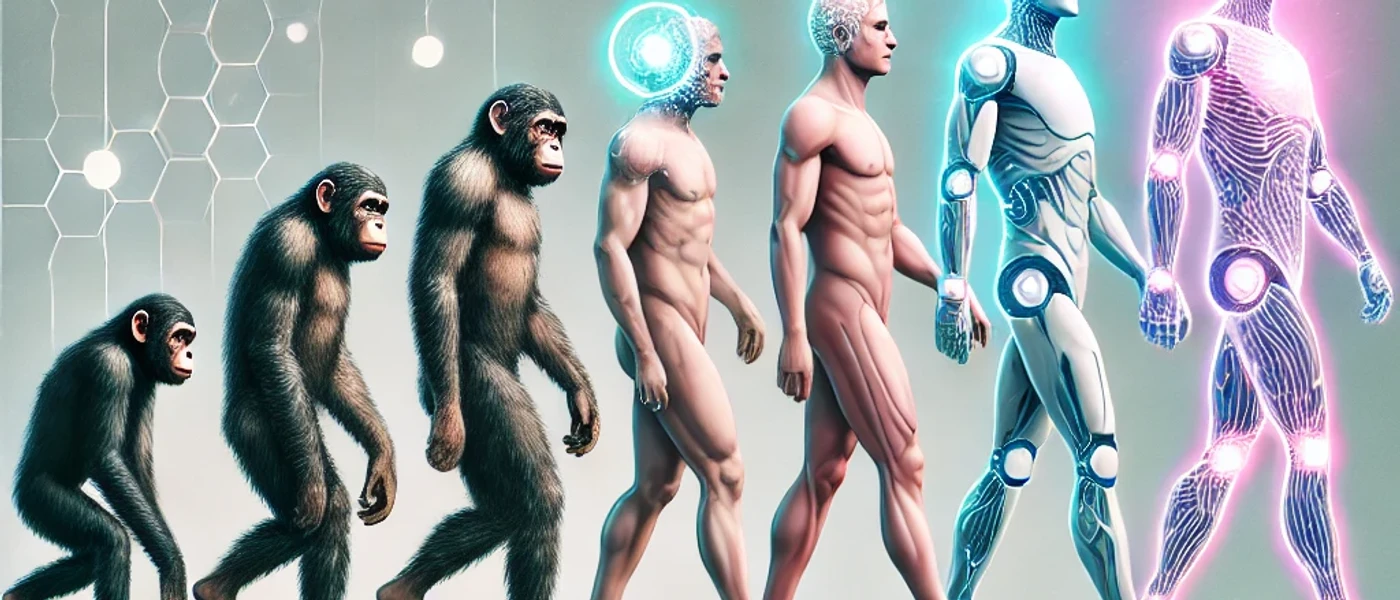
At every major point of technological disruption, fear was the first reaction. The printing press. The calculator. The industrial revolution. And every time, the outcome wasn't extinction — it was evolution.
When I go to weekend barbecues, I struggle when people ask, "So, what do you do?" I usually respond, "I work with AI" — but that's about as useful as my grandmother proudly telling people, "He works with computers." These days, ChatGPT has made weekend barbecues remarkably easier, as more people now understand the basics of AI without needing a crash course.
Of course, designing conversational AI is very different from asking ChatGPT to write a cover letter, so the conversation usually flows into me explaining how I work with AI in customer experience and contact centres. After the inevitable "Oh, I hate chatbots," it always takes the same familiar turn:
"So, is AI going to take over and take everyone's jobs?"
It's a fair question — but it's also one born from a fairly naive understanding of what AI actually is. The whole problem lies in the word: "intelligence."
We humans see ourselves as intelligent beings. We're competitive, we're proud, and we tend to inflate our sense of agency. Deep down, we feel threatened by anything that even hints at matching us. But intelligence, by definition, is simply "the ability to acquire and apply knowledge and skills." And if you look closely, we've been surrounding ourselves with intelligent systems long before AI hit the mainstream.
We've trusted our lives with autopilot systems for almost 90 years — systems that quietly calculate position, altitude, speed, and weather conditions, freeing pilots to focus on the moments that really matter. We've relied on spell checkers for decades to catch our grammar slip-ups and sharpen our writing, without feeling any less human for it.
The real fear isn't that AI is intelligent. It's that we project onto it the idea of consciousness.
I'm not going to open that Pandora's box today. Consciousness has been debated for centuries across science, philosophy, and spirituality, and it remains one of the great unsolved mysteries. But if we strip away the sci-fi projections and existential dread, AI is, at its core, a system. A tool. It crunches vast amounts of data, finds patterns, predicts outcomes, and can now serve it back to us in a conversational way. It's sophisticated — but it's not sentient.
So, will AI take jobs? I'd be lying if I said no. Some jobs will absolutely change, and some will disappear — just as they did when previous technologies reshaped the world.
When Gutenberg's printing press spread across Europe, it was feared it would unleash chaos, undermine authority, and flood the world with misinformation. Instead, it triggered a literacy boom, the spread of ideas, and eventually the birth of the modern world. When the humble calculator appeared, teachers worried it would destroy children's ability to do maths. Instead, it allowed students to move beyond arithmetic and into problem-solving, logic, and higher reasoning.
At every major point of technological disruption, fear was the first reaction. And every time, the outcome wasn't extinction — it was evolution.
In my opinion, AI will enhance humans, just as every major leap in technology has done before. For the arts, I believe AI won't replace creativity. It may speed up music production, video editing, or generate ideas for illustration, but that should simply give creatives more time to focus on creating. There is something inherently human in art, and just as digital cameras gave photographers more time behind the lens and less time amidst the acrid chemicals of darkrooms, we will see how having time back fuels creativity.
And yes, even contact centre agents — often seen as among the most "at-risk" — stand to benefit. Instead of handling endless password resets and basic account changes, they'll engage in more complex, meaningful conversations that deepen customer relationships and grow their own skills.
The work will evolve. And we'll evolve with it — if we choose to.
Maps extended our sense of space.
Books extended our memory.
Calculators extended our ability to reason.
Electricity extended our ability to create beyond the limits of day and night.
The internet extended our collective mind.
AI is simply the next extension.
A tool to stretch our thinking, sharpen our ideas, and deepen how we work, connect, and create.
The real threat isn't AI itself. It's standing still while the world moves forward without us.